
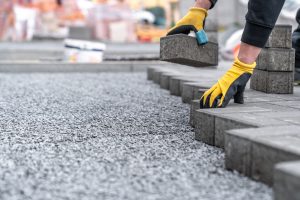
 Block paving is one of the most popular choices for driveways, patios, and garden paths across the UK. But once you have decided on block paving, a whole new question opens up: which pattern should you choose?
The laying pattern is not just about looks. It also affects how strong your surface will be, how long it lasts, and how well it handles weight and weather. As block paving specialists in Colchester, we work with all of the main patterns every day. This guide walks you through the most popular ones so you can make the right choice for your home.
Why Does the Pattern Matter?
When blocks are laid in certain directions, they lock together and share the load more evenly. This is especially important for driveways where cars will be parking and driving over the surface regularly.
Some patterns also look better in certain spaces. A small garden path calls for something different to a wide driveway or a large patio area. Getting this right from the start means your surface will look good and hold up well for many years to come.
The Main Block Paving Patterns
1. Herringbone
Herringbone is the most widely used pattern for driveways in the UK, and for good reason. The blocks are laid at a 45-degree or 90-degree angle to each other in a zigzag arrangement, which means the blocks interlock very tightly.
This interlocking effect makes herringbone block paving extremely strong. It distributes weight across the surface rather than concentrating it in one spot, so it handles cars, vans, and heavier vehicles very well. It is also less likely to shift or sink over time compared to other patterns.
Herringbone works best for driveways and any area that takes regular vehicle traffic. It does require more cutting at the edges, but the end result is a clean, professional finish.
2. Stretcher Bond (Running Bond)
Stretcher bond is laid in straight rows where each block is offset by half a length from the row above, similar to the way bricks are laid in a wall. It is a clean, simple pattern that suits modern properties well.
This pattern is easier and quicker to lay than herringbone, and it uses fewer cut blocks. However, it is not as structurally strong under vehicle loads because the joints run in longer lines across the surface. For this reason, stretcher bond is better suited to patios, pathways, and low-traffic areas rather than driveways.
3. Basket Weave
Basket weave paving involves pairs of blocks laid alternately in horizontal and vertical positions, creating a repeating square pattern that looks like a woven basket. It has a very traditional, decorative appearance.
This pattern works well for patios, garden paths, and decorative courtyard areas. It is not recommended for heavy vehicle use, as the jointing is not as strong under continuous load as herringbone. However, for a patio or path where the focus is on appearance, basket weave is an excellent choice.
4. Circular and Feature Patterns
Circular patterns are laid outward from a central point, often using a specially shaped set of blocks called a circle kit. They are typically used as a feature within a larger paved area, for example at the end of a driveway or in the centre of a patio.
Feature patterns can also include borders and banding, where a different colour or style of block is used to frame the main surface. These design details add character to a project and help to break up large areas of paving.
Circular and feature patterns require more skill and time to lay correctly, but the results can be striking. They work especially well on larger driveways and patio spaces.
Which Pattern Is Right for Your Space?
Pattern |
Best For |
Suitable for Vehicles? |
Appearance |
|---|---|---|---|
Herringbone (45 or 90 degrees) |
Driveways, high-traffic areas |
Yes |
Classic, structured |
Stretcher Bond |
Patios, paths, low-traffic areas |
No |
Modern, clean |
Basket Weave |
Patios, courtyard areas, paths |
No |
Traditional, decorative |
Circular / Feature |
Focal points, borders, large areas |
Partial |
Ornamental, eye-catching |
Colchester Driveways: What We See Most
In our work across Colchester and the surrounding areas, herringbone remains the most popular choice for driveways. Homeowners like that it is both practical and attractive, and it suits the variety of property styles you find across Essex and Suffolk.
For patios, we see a lot more variety. Stretcher bond and basket weave both work well in garden settings, and many customers choose to combine a stretcher bond main area with a contrasting border in a different colour. You can see examples of this kind of careful design in our patio paving project in Colchester.
Circular features have become more popular in recent years, particularly on larger driveways where there is space to make more of a design statement. We carried out a recent project in Wivenhoe that shows how thoughtful paving design can completely transform an outdoor space. You can view the Wivenhoe patio paving project to see what is possible.
A Note on Planning Permission
If you are covering more than five square metres of your front garden with an impermeable surface, you may need planning permission. Permeable block paving (which allows rainwater to drain through the joints rather than run off) can avoid this requirement in many cases.
The Government provides official guidance on this topic, which you can read at the GOV.UK guidance on the permeable surfacing of front gardens. It is always worth checking before you start work, and our team can advise you when we carry out your free estimate.
Ready to Choose Your Pattern?
Picking the right block paving pattern does not need to be complicated. If you are laying a driveway, herringbone is almost always the best starting point. If it is a patio or path, you have more freedom to go with something decorative.
LGL Groundworks has over 10 years of experience laying block paving across Essex and Suffolk. We advise on patterns, materials, and colours as part of every project, and we offer free estimates with no pressure. Get in touch today to talk through your driveway design ideas.