
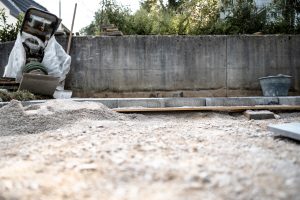
 If you are commissioning a commercial project in Colchester for the first time, you might be wondering what actually happens on site before the builders arrive. The answer is: quite a lot. Groundworks is the preparation phase that makes everything else possible. Done well, it sets up a safe and stable platform for the entire build. Done poorly, it causes problems that are expensive and disruptive to fix later.
This guide explains each stage of commercial groundworks in plain language, so you know what to expect and why each step matters.
What Is Commercial Groundworks?
Groundworks covers all the work carried out at ground level before above-ground construction begins. On a commercial site, this typically includes clearing the land, digging out the earth, laying drainage runs, preparing a compacted subbase, and handing the site over ready for foundations or surfacing.
Commercial projects are more involved than domestic ones. The ground is usually being prepared to carry heavier loads, such as a warehouse floor, a car park, or a retail unit. That means the groundwork needs to be accurate and well-planned from the start.
Stage 1: Site Clearance
The first job is to clear the site of anything that would get in the way. This includes:
- Vegetation, trees, and scrub
- Existing structures or hard surfaces
- Topsoil, which is too soft and organic to build on
Topsoil is stripped and removed because it compresses unevenly under load. Once it is gone, the contractor has a clean base to work from.
Stage 2: Setting Out
Setting out is the process of marking the exact positions of structures on the ground before any digging takes place. The contractor uses survey data and plans to place markers, pegs, and string lines across the site.
This step is more important than it sounds. If setting out is even slightly off, everything built on top of it will be in the wrong place. Errors at this stage can mean walls in the wrong position, drainage runs that do not connect properly, or foundations that fail to meet the approved plans.
Stage 3: Excavation
Once the site is set out, excavation begins. This is the process of digging out earth to the required depth and removing it from site.
On a commercial project, the depth of excavation depends on what is being built. A lightly loaded car park needs less depth than the foundations for a multi-storey unit. The contractor follows structural engineers’ drawings to get this right.
Excavations on commercial sites in the UK are subject to health and safety regulations. The Health and Safety Executive (HSE) publishes guidance on safe excavation practices, covering topics such as preventing collapse, managing groundwater, and protecting workers from underground services.
All spoil (the removed earth) needs to be disposed of correctly. If the ground is contaminated, that adds extra requirements around disposal.
Stage 4: Subbase Preparation
The subbase is the layer of compacted granular material that sits beneath a finished surface, such as block paving or concrete. On a commercial site, the subbase carries significant load, so it needs to be both deep enough and thoroughly compacted.
The material used is typically Type 1 MOT stone, a crushed aggregate graded to compact tightly. It is laid in layers and compacted with a vibrating roller or plate compactor. If any layer is not compacted properly, the surface above it will sink or crack over time.
Getting the subbase right is one of the most important jobs a groundwork contractor in Essex and Suffolk carries out. It is hidden once the project is finished, which is why some contractors cut corners here. Those corners always show up eventually.
Stage 5: Drainage Installation
Before any surface is laid, drainage runs need to go in. On a commercial site this usually means:
- Surface water drainage to carry rainwater away from hard surfaces
- Foul drainage connected to the sewer network
- Soakaways or attenuation systems where required by planning conditions
Drainage must be installed at the correct gradient so that water flows in the right direction. Pipes are laid in a prepared trench, bedded in pea gravel, and backfilled carefully so the pipe does not move or crush under load.
Getting drainage wrong is costly. A blocked or collapsed drain on a commercial site is disruptive and expensive to repair, especially once surfacing is in place above it.
Stage 6: Foundations
Once the ground is excavated and drainage is in place, foundation contractors in Essex and Suffolk take over this part of the process. Strip foundations, pad foundations, or raft foundations are chosen based on the ground conditions and the load being placed above.
Concrete is poured to the specified depth and width, reinforced where required, and left to cure. The foundation transfers the load of the structure safely into the ground.
Stage 7: Handing Over the Prepared Site
Once groundworks are complete, the site is handed over to the main contractor or the next trade. At this point the ground should be:
- Excavated to the correct level
- Drained and connected to the relevant systems
- Provided with a prepared subbase or cast foundations
- Safe, stable, and ready for the next phase
Why Cutting Corners on Groundworks Is Expensive
Because groundworks happen before anything visible is built, it can be tempting to save money at this stage. This is almost always a false economy.
| Problem | Likely Cause | Typical Cost to Fix |
|---|---|---|
| Surface cracking or sinking | Poor subbase compaction | Significant resurfacing work |
| Drainage backing up or flooding | Incorrect pipe gradient | Excavation and relay |
| Foundation movement | Inadequate depth or poor concrete mix | Structural repair, potentially demolition |
| Building out of position | Setting out errors | Varies, often severe |
Problems caused by poor groundworks are harder to fix once construction is above ground. In some cases, surfaces or structures need to be removed entirely to correct the issue underneath.
Working With a Groundworks Contractor in Colchester
A good groundworks contractor will work from your engineer’s drawings and planning consent, coordinate with other trades, and keep the programme on track. They should be transparent about what each stage involves and flag any issues, such as unexpected ground conditions, before they become problems.
LGL Groundworks is a groundwork and landscaping contractor based in Essex, serving Colchester, Ipswich, and the surrounding areas. With over a decade of experience across commercial and residential projects, the team handles everything from initial site clearance through to foundation preparation, drainage installation, and hard landscaping.
If you are planning a commercial project in Colchester and want a clear, honest conversation about what the groundworks will involve, get in touch for a free quote.